
FEMCoach in Spain: An International Meeting of Female Coaches, Experts and Project Partners
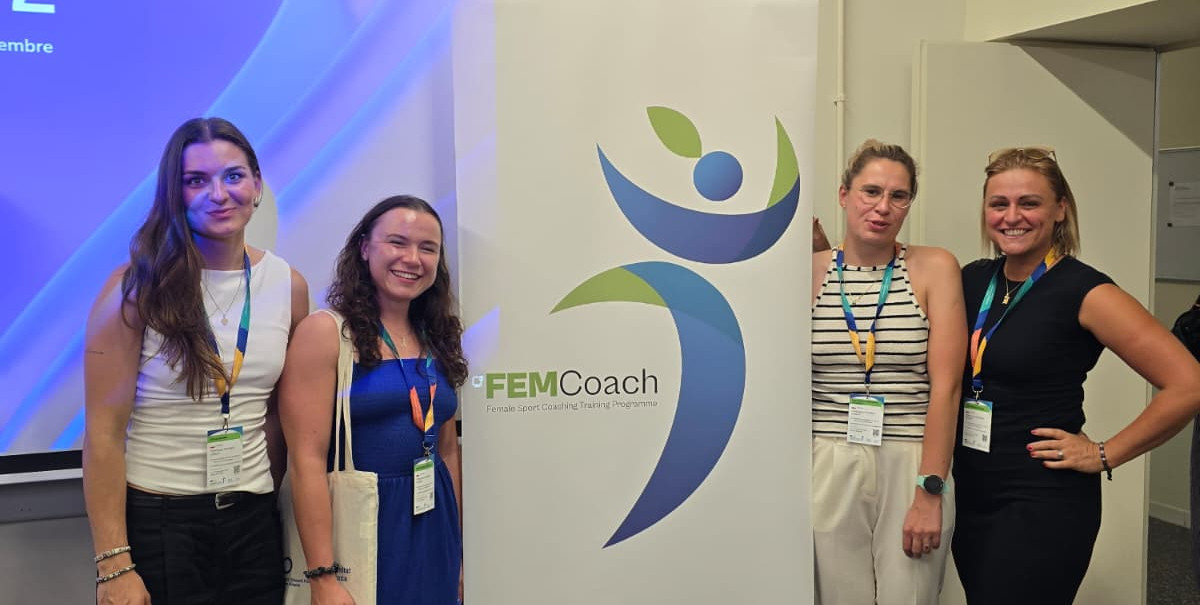
On 7–8 September 2026, the 2nd FEMCoach International Seminar took place in Girona and Banyoles, alongside the 9th International Seminar on Sport Tactics and Technique. The event marked one of the key moments of the FEMCoach project, creating a space for female coaches, experts and representatives of partner organisations from different European countries to come together.
This year’s seminar was held under the theme “Training Female Youth Athletes: How Should We Train Them?” and focused on the specific aspects of working with young female athletes. The programme combined scientific knowledge with coaching practice through expert lectures, workshops, a panel discussion and opportunities for participants to exchange experiences.
The event also represented the final activity of the FEMCoach training programme. In 2026, 40 female coaches took part in a learning process based on the FEMCoach MOOC, sharing knowledge and experiences in an international and culturally diverse environment.
From the role of women in sport to the health of young female athletes
The first part of the seminar took place on 7 September at the University of Girona. Following the official opening, participants attended a lecture by Núria Puig Brandes on the role of women in Olympic governance and the impact of their presence on female athletes.
The programme also included a practical workshop led by Nora Ayala Serra, focusing on communication as a tool for empowering young female athletes. Participants explored how coaches can use feedback to support athletes’ development.
On the second day, the event moved to Banyoles. Dr Esther Morencos Martínez addressed issues related to the growth, maturation and training of girls and their implications for sustainable sports development. Dr Anna Carceller Mallada then discussed women’s hormonal health across the lifespan and its importance for health and sports performance.
Another important part of the programme was the FEMCoach exhibition “From Barriers to Opportunities: Rethinking Gender Stereotypes in Female Sports Coaching”, which drew attention to gender-related barriers and stereotypes in sport and coaching.
Knowledge, practice and exchange of experiences
The seminar was designed to bring scientific knowledge together with everyday coaching practice. One example was a panel discussion focusing on the team of specialists supporting the performance of elite female athletes, featuring Anna Carceller, Azahara Fort, Víctor López-Ros and Esther Morencos.
In the afternoon, participants visited Club Natació Banyoles, where Dr Azahara Fort Van-Meerhaeghe led a practical workshop on female-specific neuromuscular training and its implications for healthy development and sports performance.
The programme also provided opportunities for networking and direct exchange of experiences. This was particularly important in the context of one of the meeting’s main objectives: to further strengthen the international FEMCoach community.
The seminar concluded with an official closing ceremony and the presentation of FEMCoach certificates to the female coaches participating in the programme.
The Institute for Sport Governance was represented at the event by Jakub Fornalik, together with four Polish female coaches participating in the FEMCoach programme: Anna Maria Kubiak, Anna Stangret, Małgorzata Lipowska and Zofia Skomra. The seminar provided the coaches with an opportunity to meet programme participants from other countries, exchange experiences and take part in lectures, discussions and practical workshops focused on working with young female athletes.
FEMCoach partners reviewed the project’s progress
The seminar was preceded by the 5th Transnational Project Meeting (TPM5), held on 7 September in Banyoles. The meeting gave project partners an opportunity to review the implementation of FEMCoach to date and plan the final stage of the project.
The partners discussed the current status of FEMCoach, project management and financial reporting, communication, dissemination and visibility activities, as well as the implementation and results of the FEMCoach course. The agenda also covered the results of the third stage of the research, a review of the international webinars, the programme of national workshops and activities related to the sustainability of the project’s results.
This final aspect is particularly important as FEMCoach enters its concluding phase. The project is not limited to delivering a single training programme. Its ambition is to leave behind knowledge, materials, a training model and an international community that can continue to support the development of female coaches beyond the project’s lifetime.
FEMCoach: developing female coaches, supporting young athletes
FEMCoach is an Erasmus+ Sport project focused on developing the competencies of women working with young athletes. It combines education, research, knowledge exchange and international collaboration, while also highlighting the need for greater representation of women in coaching roles.
The meeting in Spain also demonstrated the broader dimension of this goal. Developing female coaches’ competencies is not only about their individual professional pathways. Knowledge related to the development of young female athletes, communication, health, safety and appropriate training planning can contribute to improving the experiences of future generations of young people participating in sport.
The two days in Girona and Banyoles were therefore not only an opportunity to reflect on an important stage of FEMCoach, but also to bring together the perspectives of researchers, practitioners and female coaches from different countries. It is precisely this exchange of knowledge, experiences and different approaches to coaching that can help build a more informed, supportive sporting environment that responds to the needs of young female athletes.

Funded by the European Union. Views and opinions expressed are however those of the author(s) only and do not necessarily reflect those of the European Union or the European Education and Culture Executive Agency (EACEA). Neither the European Union nor EACEA can be held responsible for them.