New report SOPROS on the social protection of elite athletes in Europe. Poland among the countries analysed

What does social protection for elite athletes look like during and after their sporting careers?
A freshly published evaluation report, developed as part of the international SOPROS project (Assessing, Evaluating, and Implementing Athletes’ Social Protection), reveals the insufficient social protection mechanisms for elite athletes in Olympic disciplines across Europe, including Poland. Do current legal and institutional solutions meet the real needs of those who dedicate their lives to sport?
European study, Polish perspective
The SOPROS report, Social Protection of Elite Athletes in Olympic Disciplines in Europe: Assessing the Current State, sheds light on an often-overlooked aspect of athletes’ professional lives – their social protection. The document provides a comprehensive analysis of social security mechanisms for elite athletes in five European countries – Croatia, Germany, Poland, Portugal, and the United Kingdom – focusing on the institutional, legal, and economic dimensions of social protection.
The report not only identifies key gaps in protection systems but also paints a troubling picture of the challenges athletes face both during and after their careers: from financial uncertainty to limited career prospects and a lack of stable social security. It is an important contribution to the debate on the need to adapt public policies to the realities of Olympic athletes’ lives.
The Polish section of the report, prepared by PhD Paweł Zembura from the Institute for Sport Governance, includes a detailed analysis of legislation, institutional frameworks, and examples of good and bad practices concerning athletes’ social security in our country.
From full support to no protection – the social landscape of Olympic sport in Europe
Across Europe, there are both inspiring examples of effective social protection for athletes and situations that show just how much remains to be done.
In Portugal, a legal provision allows elite athletes, under certain conditions, to be recognised as employees. This grants them full labour rights, including health insurance, pension entitlements, and sickness or accident benefits.
Germany has developed an extensive support system that covers not only the competition years but also the period after retirement. Retraining programmes, assistance in job placement, and the co-financing of certain costs by federations and the state give athletes a real chance to transition safely into a new professional life.
There are also examples that highlight the limitations of current systems. In the United Kingdom, there is no unified framework – an athlete’s situation largely depends on their discipline and the financial resources of their federation. In Croatia, social protection is strongly tied to sporting success, meaning that athletes from less medal-winning disciplines are often left without any safeguards. These differences show that social protection in European elite sport remains a patchwork – solid in some places, riddled with gaps in others, and in urgent need of attention.
Social protection for athletes in Poland – potential and barriers
The social protection system for Olympic athletes in Poland remains fragmented and dependent on current sporting results. The main form of support is ministerial scholarships, which aim to motivate athletes but do not provide adequate protection. The scope of protection and entitlements varies greatly depending on the athlete’s institutional affiliation. The most extensive and structured support is provided to military athletes (Central Military Sports Team – CWZS), but entry into this system is virtually inaccessible for most. This model turns social protection into a privilege for a narrow group of medallists, leaving others without guarantees in case of illness or career termination.
While recent reforms have brought some improvements – such as broader access to ministerial scholarships and enhanced protection for pregnant athletes – significant gaps remain. These include the short-term and ad hoc nature of scholarship contracts, the lack of sickness insurance for scholarship holders, and the non-recognition of scholarship periods towards unemployment benefits.
About the SOPROS project
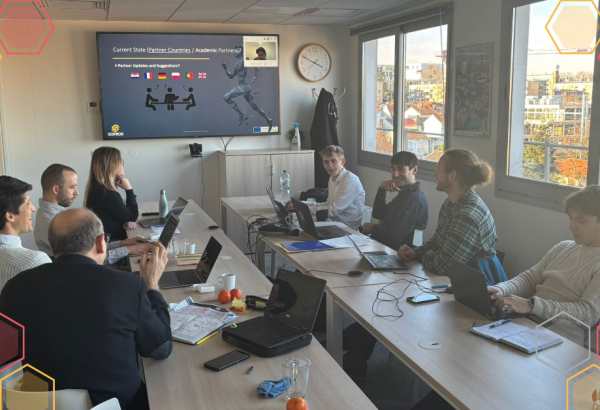
SOPROS is a three-year project funded by the Erasmus+ Sport programme, implemented by academic partners and sports institutions from five European countries, including the Institute for Sport Governance. Its aim is to assess, compare, and foster discussion on solutions for the social protection of Olympic athletes.
The project is grounded in human rights principles and recognises social protection – encompassing ten key benefits, including healthcare, sickness benefits, accident benefits, pensions, and unemployment support – as a fundamental right of every athlete.
The research involved representatives of the sporting community, public institutions, and athletes’ organisations from across Europe.
Click and read more about SOPPROS!

Funded by the European Union. Views and opinions expressed are however those of the author(s) only and do not necessarily reflect those of the European Union or the European Education and Culture Executive Agency (EACEA). Neither the European Union nor EACEA can be held responsible for them.