
Accessible Sport Is About More Than Infrastructure. How Can We Build Organisations That Are Open to Everyone?
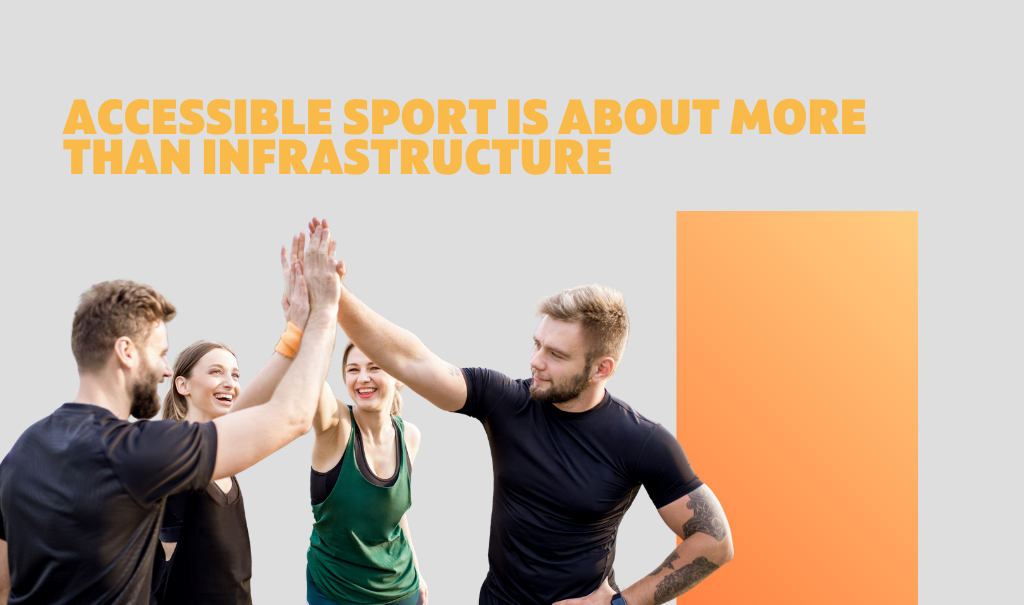
Sport plays an important role in building healthy and inclusive communities. It can foster social skills, strengthen a sense of belonging, and help people from diverse backgrounds and experiences build meaningful connections. However, to fully realise this potential, sport must be genuinely accessible to everyone.
When we talk about accessibility in sport, we often think about infrastructure, participation costs, or the availability of sports programmes. Increasingly, however, research and practical experience show that the barriers to participation are far more complex.
One example is the guide Aqua Welcome: Empowering Newcomers Through Aquatic Physical Literacy, which focuses on supporting people who are beginning a new life in a different country through aquatic physical activity. Although the publication centres on swimming and water-based activities, its findings extend far beyond the aquatic environment and offer valuable insights for the entire sport sector.
Accessibility Is About More Than Infrastructure
The authors highlight that participation in sport is influenced by a range of factors that often go unnoticed by sport organisations. Among the most significant barriers are:
- language and communication barriers,
- cultural differences,
- limited awareness of available programmes,
- restricted social networks,
- and the feeling that a particular environment was not designed with newcomers in mind.
This means that even the best-equipped sports facility cannot guarantee accessibility if participants do not feel welcome or simply do not know how to begin their sporting journey.
Sport Organisations Have More Influence Than They May Think
The publication emphasises that creating accessible sport begins with the everyday decisions made by sport organisations. These changes do not always require significant financial investment. More often, the greatest impact comes from the way organisations communicate, their openness to diversity, and their willingness to understand the needs of participants.
Accessible sport is built on clear and inclusive communication, openness to diversity, and a genuine commitment to understanding participants’ needs. Equally important is creating an environment where everyone feels safe, accepted, and has a strong sense of belonging.
These are the factors that ultimately determine whether someone decides to join a sports club or programme and, just as importantly, whether they choose to stay.
Inclusion as a Core Element of Responsible Sport Governance
Increasingly, it is recognised that the responsibility of sport organisations extends beyond organising training sessions and competitions. It also includes creating environments that encourage participation from all members of society, regardless of their age, background, experience, or personal circumstances.
Building inclusive sport should not be viewed as an additional responsibility but as a fundamental element of good governance. Organisations that recognise and remove barriers to participation not only engage more people in sport but also strengthen their social impact and build lasting relationships with their local communities.
Sport Begins with a Sense of Belonging
The Aqua Welcome guide reminds us of something that is often overlooked in sport: participation does not begin with the first training session. It begins with the feeling of being welcome.
This is an important lesson for every sport organisation. Regardless of the sport or discipline, it is worth regularly asking one simple question:
Are we designing sport for everyone, or primarily for those who are already part of it?
The answer to this question may well be the first step towards creating a more open, accessible, and responsibly governed sport system.